
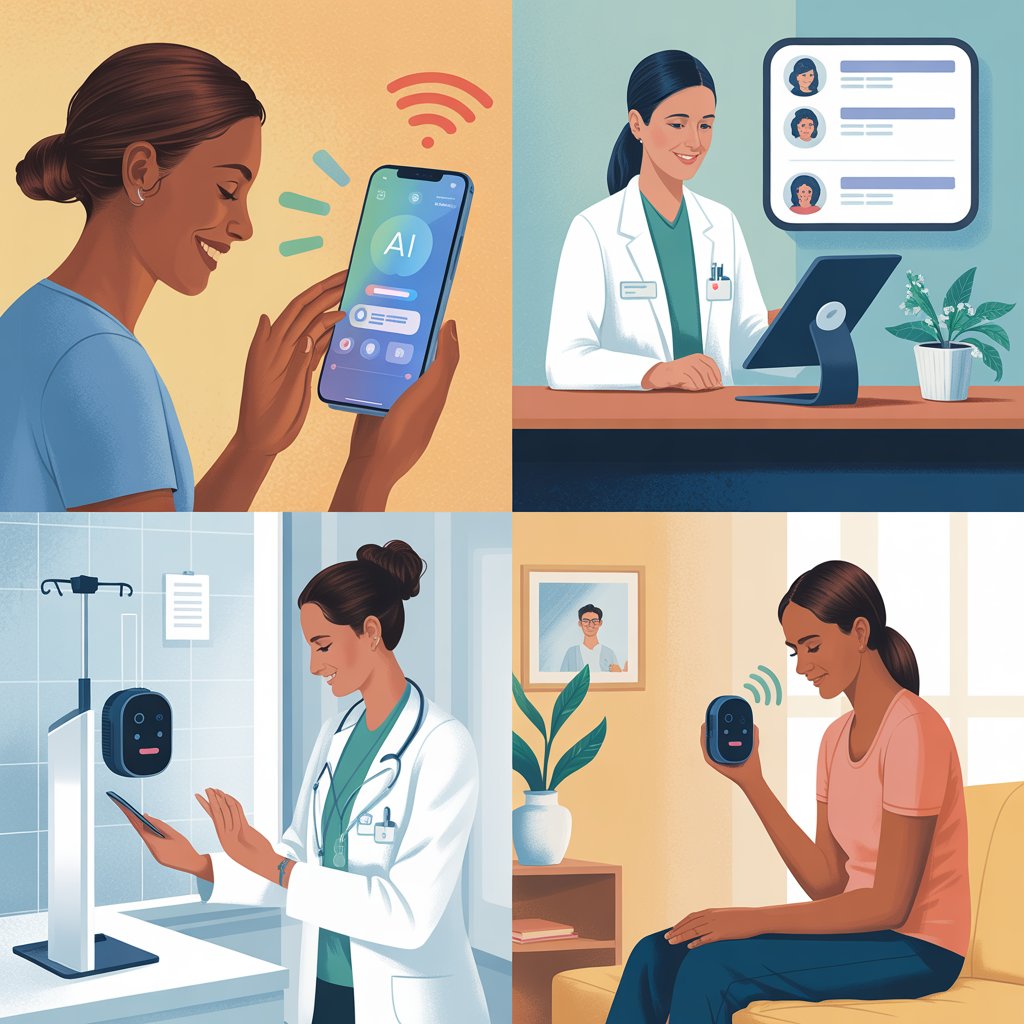
Artificial Intelligence (AI) has become a major force of innovation in healthcare, and one of its most exciting applications is voice technology. AI-powered voice assistants are no longer limited to smart speakers or customer service they are now transforming how patients and healthcare providers communicate, manage care, and make decisions. From the first sign of a symptom to long-term treatment and recovery, these voice assistants are reshaping the entire patient journey.
1. Early Awareness and Symptom Checking
The healthcare journey often begins with a question: “What’s wrong with me?” AI-powered voice assistants can help patients at this critical stage by guiding them through symptom checks, offering possible explanations, and helping them decide whether to seek medical attention.
Instead of searching online and worrying about confusing results, patients can have a simple, natural conversation with a voice assistant that provides reliable, easy-to-understand guidance. This not only empowers people to make informed decisions but also reduces unnecessary visits to clinics and hospitals.
2. Effortless Appointment Scheduling
Booking a doctor’s appointment has traditionally been a time-consuming process. AI voice assistants make it fast and simple. Patients can schedule, reschedule, or cancel appointments anytime just by speaking. These systems are available 24/7, meaning patients no longer need to wait on hold or call during office hours.
Voice assistants can also send reminders before appointments, reducing no-shows and helping clinics manage schedules more efficiently. For hospitals, this automation saves staff time and improves the overall patient experience.
3. Supporting Doctors During Consultations
AI-driven voice assistants are also changing how doctors work. During patient consultations, they can listen, transcribe, and automatically generate clinical notes. This allows doctors to focus on the patient instead of a computer screen.
By handling repetitive documentation tasks, voice AI reduces administrative workload and minimizes burnout, a major issue in healthcare today. It also ensures that medical records are more accurate and up to date, improving communication between departments and specialists.
4. Enhancing Treatment and Follow-Up
Once a diagnosis is made, consistent communication and adherence to treatment become vital. Voice assistants play a major role here too. They can remind patients to take medications, follow dietary restrictions, or attend physical therapy sessions.
For post-surgery or ongoing treatments, they can check in on the patient’s recovery, ask about pain levels or side effects, and alert healthcare teams if something seems off. This real-time support makes patients feel more connected to their care providers and improves overall outcomes.
5. Long-Term Care and Chronic Disease Management
For people living with chronic conditions such as diabetes, hypertension, or asthma, voice assistants act as a helpful daily companion. They can ask gentle check-in questions like, “Have you taken your insulin today?” or “What’s your blood pressure reading this morning?”
These small interactions encourage accountability and make it easier to track progress. Voice AI can also share motivational messages, healthy living tips, and personalized insights based on previous responses turning healthcare into a more proactive and human experience.
6. Improving Accessibility and Patient Experience
One of the most powerful aspects of AI voice technology is accessibility. Patients who are elderly, visually impaired, or not comfortable with complex apps can easily interact with a voice interface. It breaks down barriers of technology, language, and literacy.
The conversational, human-like nature of voice assistants builds comfort and trust something that’s often missing in digital healthcare solutions. For many, speaking feels more natural than typing, especially when discussing health concerns.
7. Benefits for Healthcare Providers
For clinics, hospitals, and healthcare systems, AI voice assistants bring enormous operational benefits. They handle repetitive administrative tasks like patient intake, appointment scheduling, follow-up calls, and reminders freeing up staff to focus on critical human interactions.
This automation leads to shorter wait times, smoother workflows, and better use of resources. It also ensures consistent communication, reducing the chances of missed messages or patient confusion. In the long run, it lowers operational costs while improving satisfaction for both patients and providers.
8. Challenges and the Road Ahead
Despite the many advantages, adopting voice AI in healthcare comes with challenges. Data privacy and security are top priorities patient information must always remain protected. Accuracy is another key issue; while AI has improved greatly, human oversight is still needed to verify sensitive details.
As technology evolves, the focus must be on ethical use, inclusivity, and trust. When these elements come together, AI-powered voice assistants can become a truly reliable and empathetic extension of the healthcare system.
Conclusion
AI-powered voice assistants are no longer a futuristic concept they are already transforming healthcare in real, meaningful ways. By streamlining communication, reducing administrative burden, and personalizing patient care, they make healthcare more accessible, efficient, and compassionate.
From the first symptom to recovery and beyond, voice AI is creating a more connected patient journey one where technology listens, understands, and truly cares.