If you’ve ever sat in a hospital waiting room, you know the frustration hours spent just to get a few minutes with a doctor. Long wait times are one of the most common complaints patients have about healthcare services, and they don’t just cause irritation. They reduce patient satisfaction, delay treatments, and put immense pressure on healthcare staff.
But here’s the good news: technology is stepping up. More specifically, Voice AI agents are transforming how hospitals, clinics, and telemedicine platforms interact with patients. Think of them as digital front-desk assistants who can handle scheduling, answer common questions, and even help doctors prioritize urgent cases. And unlike humans, they never get tired, stressed, or overwhelmed by too many calls at once.
Let’s dive deeper into how healthcare providers are using Voice AI to slash patient wait times and why this trend is here to stay.
The Problem of Wait Times in Healthcare
Before we celebrate the solution, it’s worth understanding the scale of the problem.
- In busy hospitals, patients may sit for hours in waiting rooms before being seen.
- Emergency departments often face overcrowding, leading to delays that could have life-or-death consequences.
This isn’t just inconvenient. Long waits increase patient anxiety, reduce trust in providers, and in some cases, worsen health outcomes. On the provider side, staff burnout skyrockets as they juggle phone calls, paperwork, and frustrated patients.
Clearly, the system needs help and that’s where Voice AI steps in.
What is Voice AI in Healthcare?
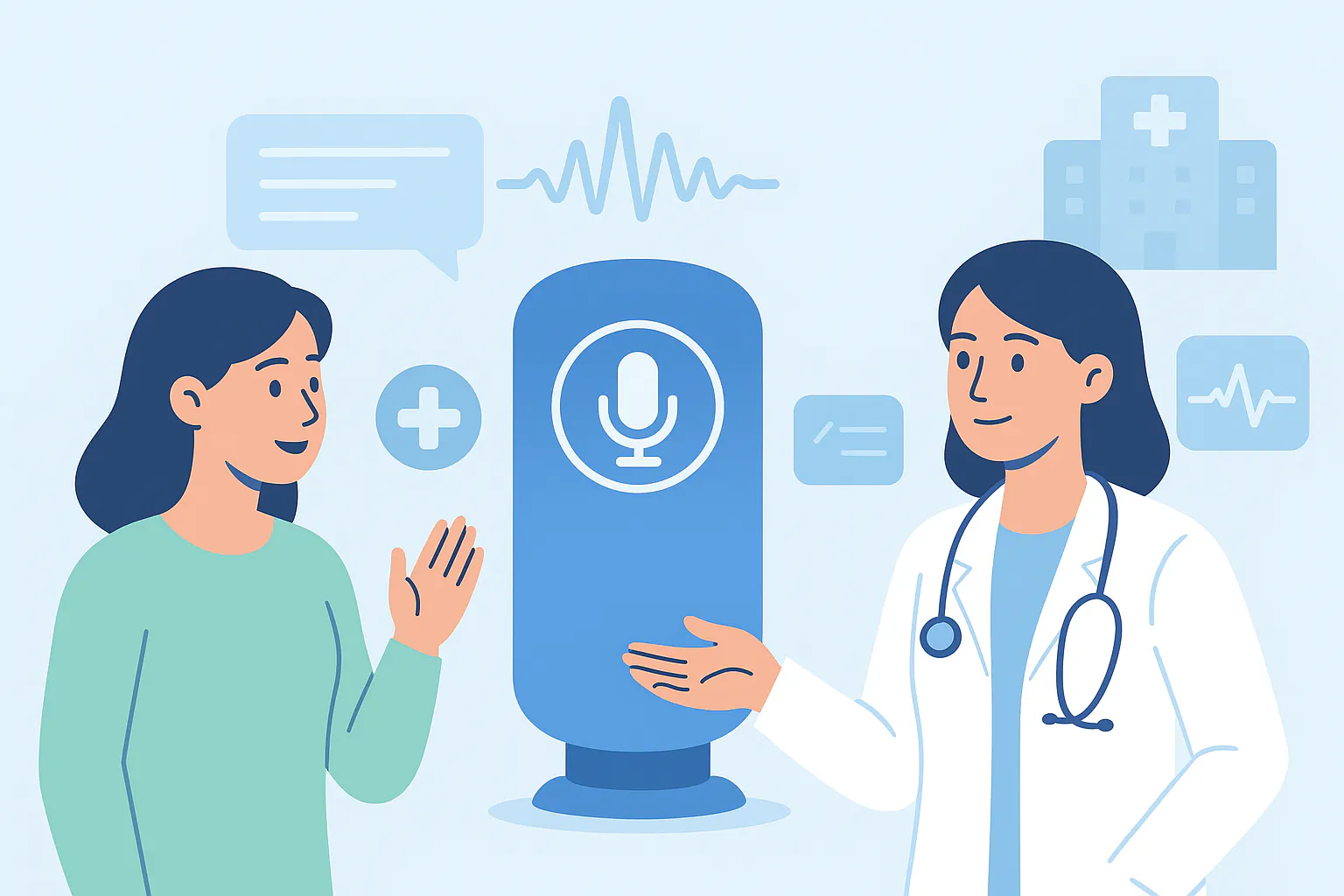
At its core, Voice AI is a combination of technologies like natural language processing (NLP), speech recognition, and machine learning that allow computers to understand and respond to spoken language.
Unlike traditional call centers where patients may be stuck pressing numbers (“Press 1 for appointments, Press 2 for billing…”), voice AI allows patients to speak naturally:
- “I’d like to schedule a check-up for next Tuesday.”
- “Can you tell me my lab test results?”
- “I’ve been having chest pain is this urgent?”
The Voice AI agent in Healthcare understands the intent, provides relevant answers, or directs the case to the right department. It’s smarter, faster, and more personal than clunky automated menus.
How Voice AI Reduces Wait Times
1. Automating Appointment Scheduling
Instead of calling and waiting for a receptionist, patients can simply interact with a voice bot available 24/7. The AI checks available slots, books appointments, and even sends reminders.
Result: Shorter phone queues and fewer no-shows.
2. Pre-Screening & Triage
Voice AI agents can gather symptoms and medical history before a patient even arrives. For example:
- “I have a fever, sore throat, and headache for 3 days.”
The AI can flag it as a possible infection, letting doctors prioritize urgent cases.
Result: Faster triage and better resource allocation.
3. Reducing Hold Times with Instant Patient Support
Patients often call hospitals for repetitive questions:
- “What are your visiting hours?”
- “Where can I pay my bill?”
- “Do you accept my insurance?”
Voice AI handles these instantly without human involvement. Patients get answers in seconds, not minutes.
Result: Less time on hold, happier patients.
4. Improving Internal Communication
It’s not just patients who benefit. Staff can use voice-enabled tools to quickly pass updates, transfer cases, or check patient data. This eliminates back-and-forth calls that waste valuable minutes.
Result: Doctors and nurses spend more time treating patients, not chasing information.
Benefits Beyond Just Cutting Wait Times
While reducing wait times is the headline benefit, voice AI brings a bundle of extra advantages:
- Enhanced Patient Engagement – Voice AI makes patients feel heard and supported, even before meeting a doctor.
- 24/7 Availability – Unlike front-desk staff, AI is always awake, always ready.
- Operational Efficiency – Less workload on receptionists and nurses means more focus on care.
- Cost Savings – Fewer staff hours wasted on repetitive calls = lower costs for hospitals.
Real-World Use Cases
Imagine this: A large urban hospital receives over 2,000 patient calls a day. Before Voice AI, patients would spend 10–15 minutes waiting to connect with a staff member. After deploying a voice AI scheduling agent , the average wait dropped to less than 1 minute.
Another example: Telemedicine platforms use voice AI for pre-consultation screening. Patients describe symptoms, the AI creates a quick summary, and doctors enter the call already informed. This shortens consultation times and allows doctors to see more patients per day.
Challenges & Considerations
Of course, no technology is perfect. Healthcare providers adopting Voice AI must address:
- Data Security & HIPAA Compliance – Patient data is sensitive. Systems must encrypt conversations and meet strict compliance standards.
- Multilingual Support – In diverse regions, AI must handle multiple languages and accents.
- Balancing Automation with Human Touch – While AI can handle routine queries, critical or emotional cases still require empathy from human staff.
The Future of Voice AI in Healthcare
We’re only scratching the surface. The future could look like this:
- AI-powered telemedicine that instantly translates doctor-patient conversations into multiple languages.
- Voice AI integrated with IoT devices like smartwatches to monitor vitals and alert doctors in emergencies.
- Predictive healthcare where AI doesn’t just respond but proactively alerts patients about potential risks based on symptoms.
In short, voice AI won’t just reduce wait times it will reshape how we experience healthcare.
Conclusion
Waiting endlessly to see a doctor or schedule an appointment has long been an accepted part of healthcare. But it doesn’t have to be. With Voice AI agents, patients get faster responses, doctors gain more time for meaningful care, and hospitals run more smoothly.
It’s not about replacing humans, it's about freeing humans to do what they do best: care for patients.
The future of healthcare is one where technology speaks our language literally.
FAQs
1. How can AI reduce patient wait times in healthcare?
AI reduces patient wait times by automating appointment scheduling, answering common queries instantly, pre-screening patients before visits, and helping doctors prioritize urgent cases. This minimizes delays at every stage of the patient journey.
2. What is a voice AI assistant in healthcare?
A voice AI assistant is a digital tool powered by speech recognition and natural language processing (NLP) that allows patients to interact using spoken language. It can schedule appointments, provide medical information, and connect patients with the right healthcare professionals.
4. Can Voice AI replace doctors or nurses?
No Voice AI is designed to support healthcare professionals, not replace them. It handles routine administrative and communication tasks, freeing up staff to focus on direct patient care.
5. How do hospitals implement Voice AI?
Hospitals usually start by integrating voice AI into their call centers and appointment systems. From there, they expand into triage, telemedicine, and patient support services to streamline workflows and improve efficiency.
6. Does Voice AI work in multiple languages?
Yes, advanced voice AI systems can handle multilingual conversations. This is especially useful in regions where patients speak different languages or have diverse accents.
7. What is the future of Voice AI in healthcare?
Voice AI will continue to evolve, combining with IoT devices, predictive analytics, and telemedicine platforms to provide real-time, personalized healthcare experiences. Patients may soon get proactive alerts and recommendations from AI based on their health data.