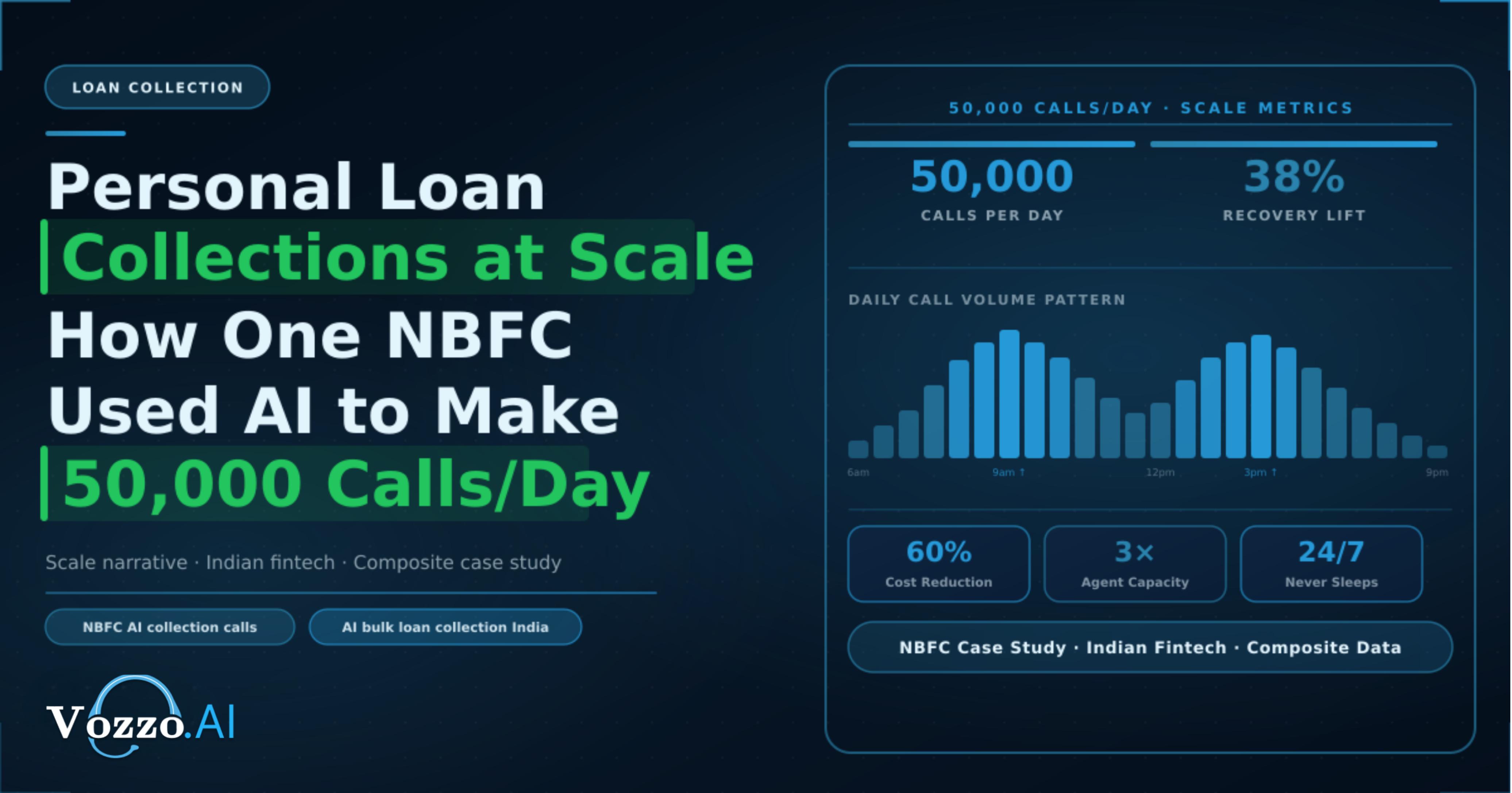
A mid-sized NBFC managing ₹1,200 crore in personal loan disbursements had 22,000 accounts slip into 30+ DPD buckets in Q3 2023. Their 40-agent team could barely touch 3,500 borrowers daily, leaving 83% of the portfolio unreached until escalation became unavoidable.
The Problem: Volume Crushes Manual Collection Ops
Personal loan portfolios grow faster than collection teams can scale. Industry data shows that NBFCs with asset books above ₹500 crore face a 4:1 ratio problem — four accounts needing contact for every agent available per day. Manual dialing limits reach to 80–100 calls per agent daily, factoring in talk time, logging, and breaks. Early-bucket accounts (0–30 DPD) get ignored because agents prioritize high-value delinquencies. This creates a conveyor belt effect: untouched early defaults age into costly NPA categories. One NBFC calculated that every week of delay in first contact increased loss severity by 11%. Traditional BPO scaling added cost but not speed, and compliance risks multiplied with inconsistent messaging across rotating teams.
How It Works: The AI Bulk Dialer Workflow
The NBFC deployed Voice AI that integrated directly with their loan management system via API. Each morning, the system pulled segmented lists: 0–7 DPD, 8–30 DPD, 31–60 DPD, and 60+ DPD buckets. AI agents placed calls in priority waves, starting with fresh delinquencies. Conversations followed dynamic scripts: payment reminders, restructuring offers, or settlement proposals based on account history. Borrowers could confirm payment dates, request callbacks, or connect to human agents for disputes. Every interaction logged automatically — promise-to-pay tags, contact outcomes, and sentiment flags. The platform handled multiple regional languages and detected optimal calling windows using historical pickup data. Failed calls auto-retried during different time slots. Human supervisors monitored live dashboards and intervened only on flagged escalations, keeping the team lean while coverage exploded.
Before vs After: Coverage and Speed
Before AI deployment, the 40-agent team reached 3,500 accounts daily with an average 18% contact rate and 72-hour callback delays for missed connections. Manual logging consumed 23% of productive hours. After switching to NBFC AI collection calls | personal loan recovery AI | AI bulk loan collection India, daily outreach jumped to 50,000 attempts with a 34% contact rate. First-touch time for new delinquencies dropped from 4.2 days to same-day contact. The human team shifted to resolution-focused roles, handling only complex negotiations and legal prep. Promise-to-pay capture rates improved 2.6x because AI could re-engage non-responsive borrowers across multiple channels within hours, not weeks. Compliance violations fell to zero as every script stayed audit-ready and recorded.
Business Impact: Four Metrics That Changed
Roll-forward rates from 0–30 DPD to 31–60 DPD decreased by 41% within 90 days, directly attributable to faster early intervention. Overall recovery in the 0–90 DPD bucket improved from 68% to 81%, adding ₹14.2 crore in collected principal over one quarter. Cost per successful contact dropped from ₹47 to ₹8, a 6x efficiency gain that freed budget for legal action on hardened defaults. Agent productivity reallocated: instead of dialing, the team closed 290% more payment plans and restructured loans. The NBFC's board noted a 190-basis-point improvement in Stage 2 asset quality, avoiding higher provisioning costs. AI-driven segmentation also identified 1,800 accounts suitable for top-up loan offers, generating ₹6.3 crore in incremental disbursements from existing customers.
Integration and Compliance: Building Trust at Scale
The platform connected to the NBFC's core banking system, CRM, and payment gateway using REST APIs with 256-bit encryption. All voice recordings stored on ISO 27001-certified servers in India, meeting RBI data localization norms. Every call script included mandatory disclosures under Fair Practices Code guidelines, and borrowers could opt out anytime via voice command or SMS. The system auto-blocked calls during restricted hours (9 PM–8 AM) and honored DND registries. Weekly compliance reports tracked adherence to contact frequency caps and generated audit trails for regulatory reviews. Integration took 11 days from kickoff to first call, with zero downtime to existing operations. The NBFC's legal and risk teams certified the workflow after a two-week pilot covering 5,000 test accounts.
Conclusion
Scale breaks manual collection models, but AI bulk dialing for personal loan recovery turns volume into advantage. NBFCs that deploy these systems early in the delinquency cycle recover more, spend less, and keep portfolios cleaner than competitors still relying on human-first approaches.