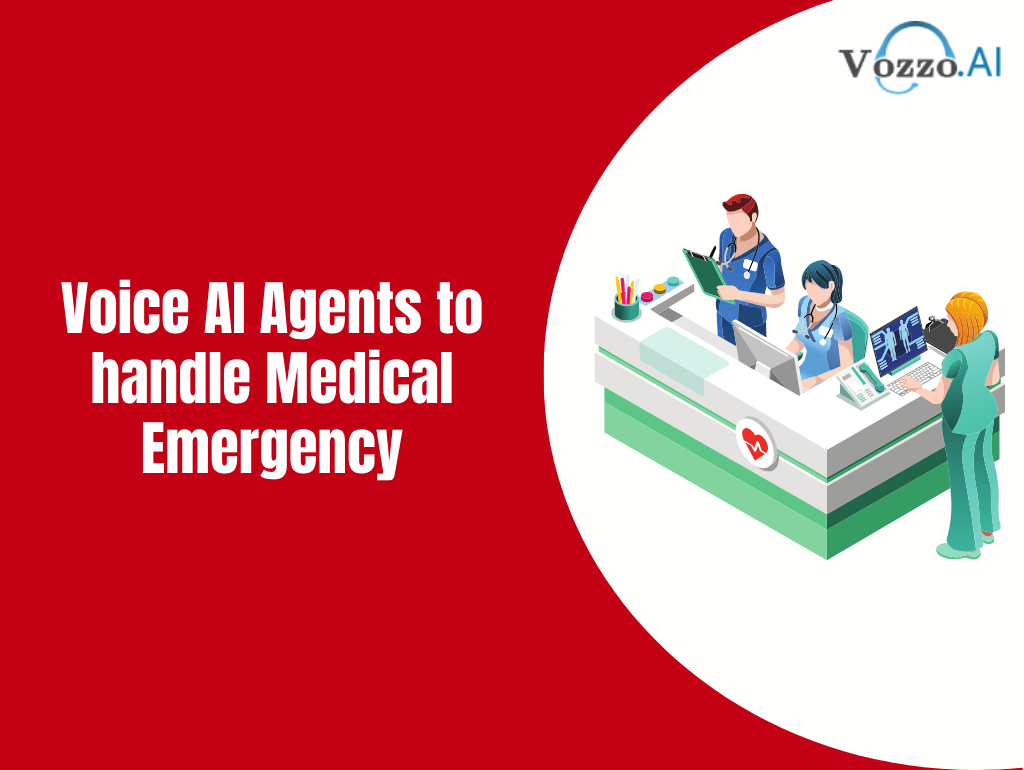
Imagine calling for medical help and having a trained voice AI agent immediately respond, assess your symptoms, and guide you on what to do next. This is no longer a distant dream; it is a rapidly emerging reality. Voice AI agents in medical settings are transforming emergency healthcare by offering instant assistance, reducing response times, and improving patient outcomes.
In a world where every second counts during medical emergencies, voice AI medical assistants are stepping up as life-saving allies. Let us explore how these intelligent systems are reshaping healthcare, especially in emergency situations, and why they might soon become indispensable in medical practice.
What Are Voice AI Agents in Medical Emergencies?
Voice AI agents in medical settings are artificial intelligence driven systems that can understand and respond to spoken language. They act as virtual medical assistants capable of interacting with patients, caregivers, and healthcare providers. By leveraging natural language processing and real time data analysis, these agents deliver critical health information, triage emergencies, and even assist in automated diagnosis.
For emergency scenarios, a Medical AI Agent can perform tasks such as:
- Asking symptom related questions
- Providing immediate care recommendations
- Connecting you to the right healthcare provider
- Alerting paramedics or electronic health records systems
The goal is simple, reduce mortality by enhancing fast, accurate, and intelligent medical interactions.
Why Voice AI in Medical Emergencies Matters
In emergencies, human based assistance is not always immediately available. Phone lines can get busy, doctors can be occupied, or the patient might be too nervous to explain everything calmly. Voice AI agents eliminate many of these barriers.
Here are some powerful advantages:
1. Faster Response Time
When a person experiences a medical emergency, time is critical. A voice AI agent is available instantly and can begin guiding the patient through lifesaving steps while help is on the way.
2. 24/7 Availability
Voice AI medical assistants do not sleep, take breaks, or get tired. They can provide uninterrupted assistance around the clock, even during peak times or unexpected surges.
3. Reduced Human Error
In emergency calls, stress often leads to incomplete or confusing communication. Voice AI agents are trained to ask structured, medically validated questions, reducing the risk of missed details.
4. Multilingual Support
Many voice AI agents support multiple languages, enabling them to help diverse populations without relying on human translators or specialists.
Real Life Applications of Medical AI Agents
Voice AI agents are not just theoretical concepts. They are already being deployed in hospitals, telehealth platforms, and emergency support systems.
Virtual Triage Assistants
Hospitals use voice AI to triage incoming patients. For example, during flu seasons or pandemics, these agents can ask pre-screening questions and guide patients to appropriate care paths.
In Home Emergency Support
Wearables and smart home devices can be connected to voice AI medical assistants. If a fall, seizure, or cardiac event is detected, the system can ask the person questions, assess consciousness, and automatically contact emergency services if needed.
Integration with EHR Systems
Sophisticated voice AI agents can update electronic health records in real time, ensuring that accurate patient information is available for physicians upon arrival.
Behind the Scenes, How Do Voice AI Medical Assistants Work?
Voice AI in medical settings depends on several powerful technologies working in harmony:
- Natural Language Processing (NLP) to understand human speech
- Machine Learning Models trained on millions of medical cases
- Medical Knowledge Databases for accurate guidance
- Voice Recognition tuned to different accents and speech patterns
- Real Time Data Processing to quickly analyze vital information
Together, these elements allow a Medical AI Agent to respond promptly and appropriately during emergencies.
➡ Voice AI Agents for Healthcare
Challenges and Ethical Considerations
Despite their promise, voice AI agents in medical emergency contexts must navigate challenges:
- Privacy and Security,
They handle sensitive health data, so robust encryption and compliance with healthcare regulations like HIPAA are essential. - Accuracy and Trust,
Patients need to trust that the system is reliable. Ensuring that the agents are fully trained and tested across diverse medical scenarios is vital. - Inclusivity,
AI models must be trained on data that represents all demographics. Otherwise, biases can lead to misdiagnosis in underrepresented groups.
The Future of Voice AI in Medical Emergencies
We are at the brink of a healthcare revolution driven by AI and voice technology. In the coming years, we might see:
- Voice First Emergency Rooms, where first contact is with an AI agent.
- Smart AI Medical Agents that can detect emergencies through changes in your voice (like breathlessness or slurred words).
- Integration with wearable tech for real time monitoring and response.
Voice AI is not replacing doctors, it is empowering them by offering rapid, precise, and equitable access to emergency care.
Conclusion
Voice AI agents in medical emergencies are no longer just innovative ideas, they are becoming indispensable tools to improve patient outcomes and save lives. By bridging critical gaps between patients and providers, these Medical AI Agents offer fast, intelligent, and reliable support during life or death situations.
If you are a healthcare provider, organization, or developer, now is the time to explore these voice AI medical assistants. Their potential is massive, and their impact on patient safety and emergency care is only beginning to unfold.
FAQs
- What is a Voice AI Medical Assistant?
A voice AI medical assistant is an intelligent system that responds to spoken medical queries and provides real time support during emergencies. - How does Voice AI help in medical emergencies?
It quickly assesses symptoms, guides first aid steps, and connects patients to medical professionals, saving critical time. - Can Voice AI replace doctors?
No, it supports doctors by improving response times and accuracy, but does not replace professional medical care.