
Voice technology is no longer experimental. It powers customer service lines, virtual assistants, appointment scheduling systems, and internal enterprise workflows. As voice interfaces become more common, they also become more attractive targets for fraud, data breaches, and misuse.
For enterprises handling thousands or even millions of calls each month, protecting voice-based interactions is no longer optional. It is a strategic necessity. Voice AI Solutions are now being designed not only for efficiency and automation, but also for security, compliance, and trust.
The companies that succeed with voice automation are those that treat security as a core feature rather than an afterthought.
The Growing Importance of Secure Voice Systems
Voice interactions often contain highly sensitive information. Customers share account numbers, personal details, medical history, and payment data during calls. In industries like banking and healthcare, even a small breach can result in significant financial and reputational damage.
At the same time, voice cloning and synthetic speech technologies have advanced rapidly. Fraudsters can now replicate a person’s voice with surprising accuracy using short audio samples. This has increased the urgency for enterprises to strengthen authentication and monitoring processes.
Modern Voice AI Solutions are evolving to address these risks through layered security strategies that combine technology, policy, and human oversight.
Understanding the Risks in Voice-Based Interactions
Before implementing protective measures, enterprises must understand the main threats.
Voice Spoofing and Deepfake Fraud
Voice spoofing occurs when attackers use synthetic audio to impersonate customers or executives. In some reported cases, criminals have used cloned voices to authorize fraudulent transactions.
Enterprises must assume that voice alone is no longer sufficient as a single authentication factor.
Data Interception
Voice data transmitted over unsecured networks can be intercepted. Without encryption, sensitive information may be exposed during transmission or storage.
Insider Threats
Not all risks come from outside. Employees with access to recorded calls or voice data can misuse information if strict access controls are not enforced.
Regulatory Compliance Challenges
Regulations such as GDPR, HIPAA, and PCI DSS impose strict rules on how personal and financial data is handled. Enterprises must ensure that voice interactions comply with these standards.
How Enterprises Are Securing Voice AI Solutions
Forward thinking organizations are implementing comprehensive security frameworks to protect voice based systems.
End to End Encryption
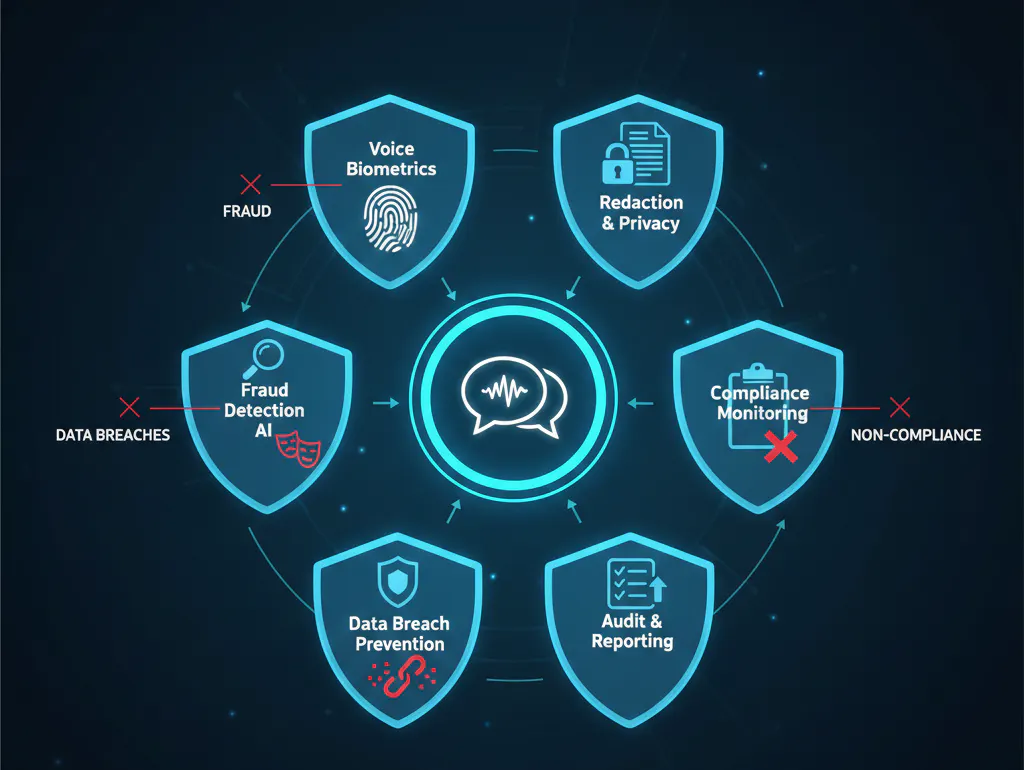
Encryption ensures that voice data is protected during transmission and storage. Secure protocols prevent unauthorized interception, reducing the risk of data leaks.
Multi Factor Authentication
Instead of relying solely on voice recognition, enterprises are combining voice biometrics with additional authentication layers. These may include one time passcodes, device recognition, or behavioral analysis.
Voice biometrics analyzes unique vocal characteristics, such as pitch, tone, and speaking patterns. When combined with other factors, it significantly strengthens identity verification.
Real Time Fraud Detection
Advanced Voice AI Solutions incorporate machine learning models that monitor conversations in real time. These systems can detect unusual patterns, suspicious phrases, or inconsistencies in speech.
For example, if a caller’s speech characteristics suddenly change mid conversation, the system may flag the interaction for further review.
Access Controls and Audit Trails
Enterprises are implementing strict role based access controls to limit who can access recorded calls and voice data. Detailed audit logs track every interaction, making it easier to identify and investigate suspicious activity.
Balancing Security and Customer Experience
Security is critical, but it should not create friction. Customers expect seamless interactions. If authentication processes are too complex, frustration increases.
The most effective Voice AI Solutions are designed to maintain both security and convenience.
Passive Authentication
Passive voice biometrics verifies identity in the background during natural conversation. Customers do not need to answer additional security questions. The system analyzes speech patterns while the call progresses.
This approach reduces call time while maintaining strong security standards.
Intelligent Call Routing
Secure voice systems can also identify high risk scenarios and route those calls to specialized agents. For example, if a transaction appears suspicious, the system can escalate it to a fraud prevention team.
This targeted approach minimizes disruption for low risk interactions.
Compliance and Data Governance Strategies
Enterprises operating in regulated industries must take additional precautions.
Data Minimization
Collect only the data that is necessary. Storing excessive voice recordings increases exposure. Many organizations are implementing policies to automatically delete recordings after a defined retention period.
Transparent Privacy Policies
Customers are more likely to trust voice automation when they understand how their data is used. Clear privacy disclosures and consent mechanisms are essential.
Regular Security Audits
Ongoing audits help identify vulnerabilities before they are exploited. Penetration testing, system updates, and compliance reviews should be part of a continuous improvement process.
The Role of Artificial Intelligence in Threat Prevention
Artificial intelligence is not only the engine behind voice automation, it is also a powerful defense mechanism.
Machine learning models can analyze millions of data points across calls, identifying patterns that human analysts might miss. Over time, these systems improve their ability to detect fraud attempts and anomalies.
Some enterprises are also using behavioral analytics. This involves analyzing how customers typically interact, including speaking speed, call frequency, and transaction patterns. Deviations from normal behavior can trigger alerts.
By integrating intelligent monitoring into Voice AI Solutions, enterprises can create adaptive security systems that evolve alongside emerging threats.
Industry Applications
Different industries face unique challenges in securing voice interactions.
Banking and Financial Services
Banks use voice biometrics to verify customers before granting account access. Combined with transaction monitoring systems, this reduces the risk of unauthorized transfers.
Healthcare
Healthcare providers must protect patient information under strict privacy laws. Secure voice systems manage appointment scheduling, prescription requests, and patient inquiries while maintaining confidentiality.
Telecommunications
Telecom companies handle high volumes of calls daily. Automated systems filter routine requests and identify potential fraud attempts, such as SIM swap scams.
Preparing for the Future of Voice Security
As voice technology becomes more integrated into enterprise operations, threats will continue to evolve. Enterprises must adopt proactive strategies rather than reactive fixes.
Future developments may include stronger anti spoofing algorithms, enhanced real time risk scoring, and deeper integration between voice platforms and cybersecurity systems.
The key is adaptability. Security frameworks should be flexible enough to incorporate new tools and respond to emerging risks without disrupting customer experience.
Conclusion
Voice has become a central channel for enterprise communication. It connects businesses with customers in a direct and personal way. However, that same accessibility makes it vulnerable if not properly protected. If your organization relies on voice based customer engagement, now is the time to evaluate your current security posture. Assess potential vulnerabilities, invest in intelligent protection mechanisms, and ensure your systems meet both regulatory requirements and customer expectations.
Protecting voice interactions is not just about preventing fraud. It is about preserving trust. Enterprises that prioritize secure voice communication today will be better positioned to lead tomorrow’s digital landscape.
➡ Start Your Journey Today, simply hit the free trial button above.