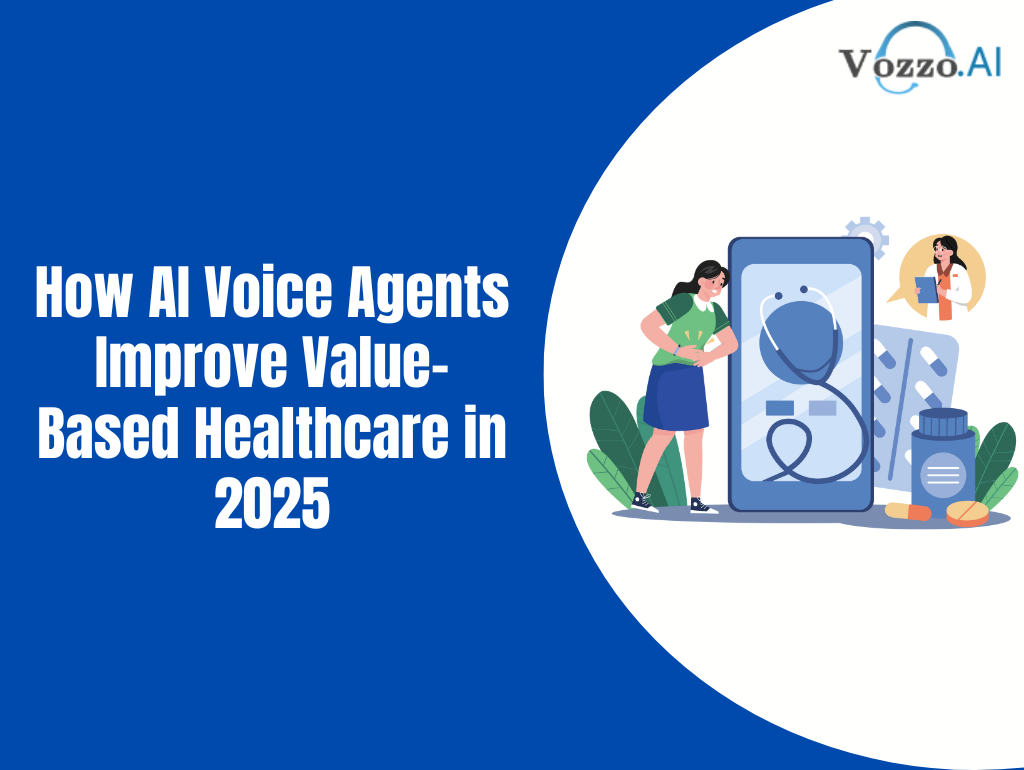
The healthcare industry is undergoing a profound digital transformation and at the forefront of this evolution are AI Voice Agents in Healthcare. These intelligent voice-driven systems are revolutionizing how providers interact with patients, manage administrative tasks, and deliver value-based care. In 2025, as hospitals and clinics increasingly adopt Healthcare Voice Assistants, the focus is shifting from volume-based to value-based healthcare. where quality, efficiency, and patient experience take center stage.
The Rise of Voice AI in Modern Healthcare
Healthcare has always been a high-touch, information-heavy field. Yet, clinicians often spend more time on documentation and administrative work than with patients. Enter Voice AI Healthcare solutions intelligent systems that use natural language processing (NLP) and machine learning to understand, process, and respond to human speech in real time.
In 2025, these systems are far more than just “smart speakers.” They are HIPAA-compliant digital assistants trained on vast medical datasets, capable of handling patient triage, appointment scheduling, clinical documentation, and even mental health screening all through natural conversation.
By blending conversational AI with clinical data integration, Healthcare Voice Assistants bridge the gap between patient interaction and data-driven care delivery.
How AI Voice Agents Enhance Value-Based Care
1. Streamlining Clinical Documentation
Doctors spend up to 40% of their day entering notes into electronic health records (EHRs). AI voice agents are changing that. By listening during consultations and automatically transcribing and structuring notes, they reduce burnout and free clinicians to focus on patients.
For instance, a physician can say: “Add blood pressure reading: 130/80, patient shows improvement.” The voice assistant instantly updates the record — no typing, no manual entry.
This seamless documentation not only saves time but also improves accuracy, a key metric in value-based care models that reward outcomes over volume.
2. Enhancing Patient Engagement and Accessibility
Value-based care thrives on patient engagement. AI Voice Agents in Healthcare make healthcare more accessible by providing 24/7 support for routine inquiries, reminders, and follow-ups.
Patients can ask:
“When is my next appointment?”
“What’s the dosage for my medication?”
“Can you remind me to take my insulin at 8 PM?”
These AI-powered voice assistants respond instantly, fostering continuity of care and reducing hospital readmissions. Voice accessibility also empowers elderly and visually impaired patients who may struggle with apps or portals.
3. Automating Administrative Workflows
Administrative inefficiency costs healthcare billions annually. Healthcare Voice Assistants are now capable of automating scheduling, insurance verification, billing inquiries, and patient intake.
For example, a patient can call a clinic and interact entirely with a conversational AI:
“Book an appointment with Dr. Shah next Tuesday.”
“I’d like to update my insurance details.”
Behind the scenes, the voice agent verifies data, syncs with calendars, and updates records — all within seconds. This automation enhances operational efficiency while improving the patient experience.
4. Supporting Clinical Decision-Making
Voice AI systems integrated with clinical decision support tools can assist doctors in real time. During a consultation, a doctor might ask:
“What’s the recommended dosage for amoxicillin in a 12-year-old with strep throat?”
The AI Voice Agent retrieves evidence-based guidelines instantly. By reducing the time spent searching through databases or reference materials, clinicians can make faster, more informed decisions a cornerstone of high-quality, value-based care.
5. Improving Remote and Preventive Care
With the rise of telemedicine, Voice AI Healthcare tools are becoming the connective tissue between patients and providers. They can monitor patients remotely through voice-enabled check-ins, track symptoms, and escalate cases that need human attention.
Imagine an elderly patient with chronic heart failure interacting daily with a voice agent:
“How are you feeling today?”
“Did you take your medication?”
“Your weight has increased slightly; should I alert your care team?”
This proactive communication model improves preventive care, reduces ER visits, and helps providers meet key performance metrics in value-based reimbursement systems.
Challenges and Ethical Considerations
While the potential is immense, AI Voice Agents in Healthcare also bring challenges:
- Data privacy and compliance: Ensuring HIPAA compliance and safeguarding sensitive health data remain top priorities.
- Bias and accuracy: AI models must be continuously trained and validated to prevent diagnostic or linguistic biases.
- Human-AI balance: Voice agents should augment clinicians, not replace them. Human empathy and judgment are irreplaceable in healthcare.
Forward-thinking organizations are tackling these issues through transparent AI design, continuous model auditing, and patient consent frameworks.
Real-World Impact: Case Studies from 2025
- Cleveland Clinic implemented a voice AI system that reduced average documentation time per patient by 35%, leading to a measurable increase in physician satisfaction.
- Mayo Clinic piloted a voice-enabled triage tool that cut patient wait times by 20%.
- CVS Health integrated Healthcare Voice Assistants into its telehealth platform, improving medication adherence by 18% among chronic care patients.
These examples highlight how voice AI is no longer experimental it’s a key driver of efficiency, empathy, and effectiveness in modern healthcare.
The Future of Voice AI in Healthcare
By 2025 and beyond, AI Voice Agents will evolve from task automation tools to intelligent care partners. With advances in conversational intelligence, emotion recognition, and predictive analytics, these systems will soon understand context and tone not just words.
We’re heading toward a future where every patient interaction from scheduling to symptom monitoring can be enhanced by voice. The goal isn’t to replace healthcare professionals, but to amplify their reach and impact, ensuring that every minute spent serves patient health outcomes.
Conclusion: A Voice for Better Care
In the era of value-based healthcare, efficiency, empathy, and personalization are non-negotiable. AI Voice Agents in Healthcare deliver on all three. They streamline documentation, enhance communication, reduce costs, and most importantly bring humanity back to medicine by freeing clinicians to do what they do best: care for people.
If your organization hasn’t yet explored Healthcare Voice Assistants, now is the time. The technology is ready, patients are receptive, and the rewards in both outcomes and satisfaction are undeniable.
Curious how leading hospitals are already putting AI Voice Agents to work?
To understand how hospitals are already leveraging this technology to simplify documentation and enhance patient care, check out our detailed article: Why Hospitals Are Using AI Voice Agents for Medical Record Documentation.
👉 Book a Free Demo today and see how AI can give your staff more time for what matters most: your patients.