
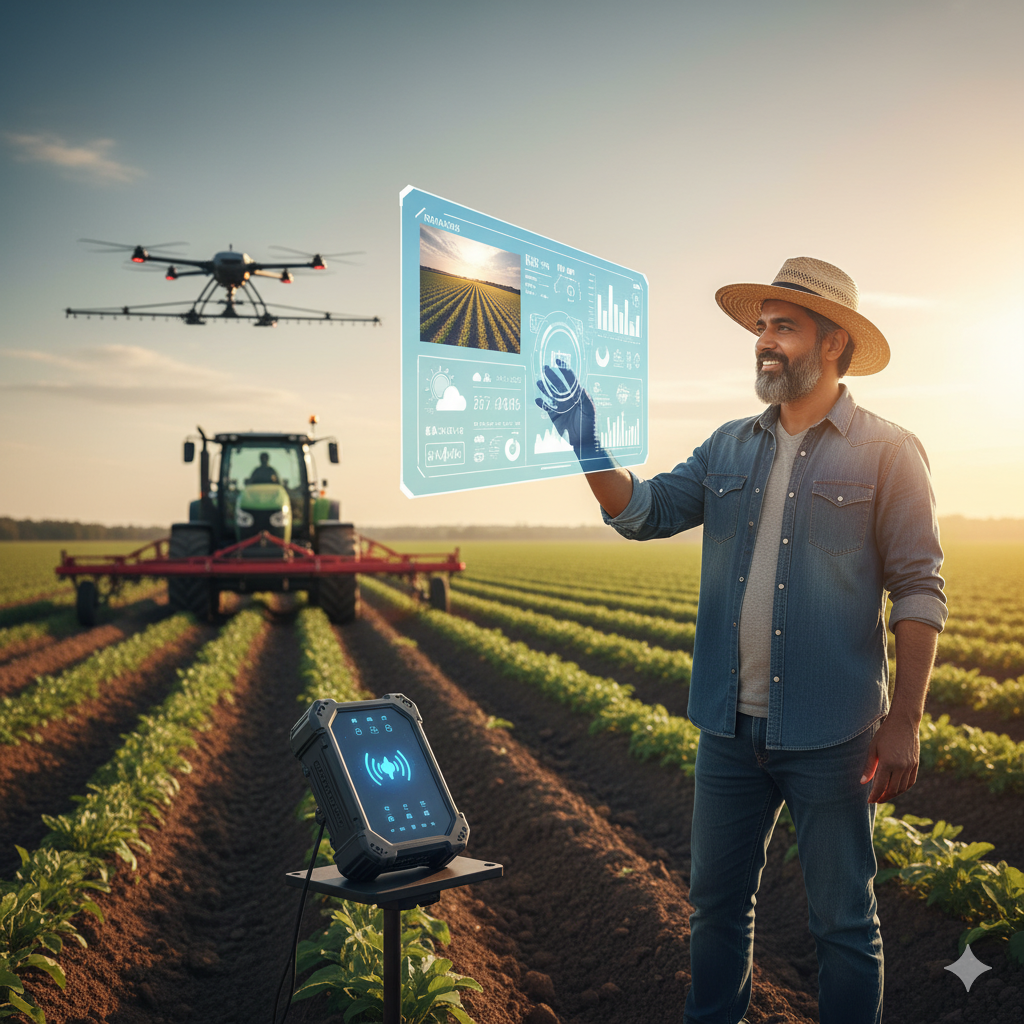
For generations, farming has relied on intuition, hard work, and experience. But in today’s digital world, something new is helping farmers work smarter Voice AI.
Imagine a farmer saying, “Check soil moisture,” or “Start irrigation in field three,” and instantly, the system responds. This is no longer futuristic — it’s happening now. Voice AI Agents in Agriculture are reshaping the way farmers interact with technology, making complex tools as simple as having a conversation.
What Is Voice AI in Agriculture?
Voice AI in agriculture combines voice recognition and artificial intelligence to help farmers control smart devices, access data, and receive instant insights — all through spoken commands.
These AI voice assistants for farming use natural language processing (NLP) to understand what the farmer says, interpret it, and act on it. Whether it’s checking weather forecasts, monitoring soil health, or scheduling irrigation, everything can be managed hands-free.
In Simple Terms:
It’s like having a digital farmhand who listens, understands, and helps — anytime, anywhere.
How Voice AI Empowers Farmers
1. Hands-Free Farming Operations
Farmers often juggle multiple tasks — from tending crops to managing machinery. Voice AI simplifies this. They can say, “Turn on the water pump,” or “Log today’s crop yield,” without stopping what they’re doing.
2. Real-Time Data Access
With IoT-powered sensors connected to Voice AI systems, farmers can instantly get updates on soil moisture, temperature, or pest alerts. Just ask, and the AI provides real-time insights.
3. Smart Resource Management
Voice AI helps prevent water and fertilizer waste by suggesting optimal usage based on live field data. Commands like “How much water do I need today?” now get precise, data-backed answers.
4. Inclusive and Accessible Technology
Perhaps the biggest advantage of Voice AI Agents in Agriculture is accessibility. Farmers who may not read or write fluently can still operate digital systems — because their voice becomes the interface. Local language support makes it even more powerful in rural areas.
5. Faster Decision-Making
When every second counts like before a storm or pest outbreak Voice AI provides instant updates and recommendations. No waiting, no scrolling, just quick, actionable information.
Real-World Applications of Voice AI in the Field
🚜 Precision Irrigation
Farmers use voice commands to control water pumps, monitor usage, and optimize irrigation schedules — saving water and increasing yield.
🌾 Crop Monitoring and Health Tracking
With drone and sensor integrations, farmers can ask their AI assistant for crop health reports, pest alerts, or growth data without touching a device.
📊 Farm Management and Reporting
Voice AI can log data, create reports, and share updates automatically — reducing paperwork and freeing up time for fieldwork.
🛒 Market Price and Supply Chain Updates
Farmers can ask, “What’s the current wheat price?” or “When’s the next transport available?” and get instant answers powered by live data sources.
Why Voice AI Matters for the Future of Farming
The power of Voice AI in modern agriculture lies in its simplicity. It bridges the gap between advanced technology and real-world usability. By making AI accessible through natural speech, it enables farmers to benefit from data-driven insights without needing to learn complex systems.
It’s not just about convenience — it’s about empowerment. Voice AI gives farmers control, confidence, and the ability to make smarter choices in real time.
Challenges and the Road Ahead
Like any emerging technology, Voice AI in farming faces challenges such as inconsistent internet connectivity, local dialect understanding, and hardware affordability.
However, with the rapid growth of rural connectivity and AI language models that understand regional languages, these barriers are quickly being overcome. In the coming years, we can expect Voice AI to be as common on farms as tractors and drones.
Conclusion: The Future Speaks Farmer
Voice AI Agents in Agriculture are transforming how farmers work from hands-free control to real-time insights. They make advanced technology approachable, efficient, and inclusive.
Farming has always been about connection to the land, the crops, and the community. Now, with Voice AI, it’s also about connection to intelligent systems that listen, learn, and help farmers thrive.