
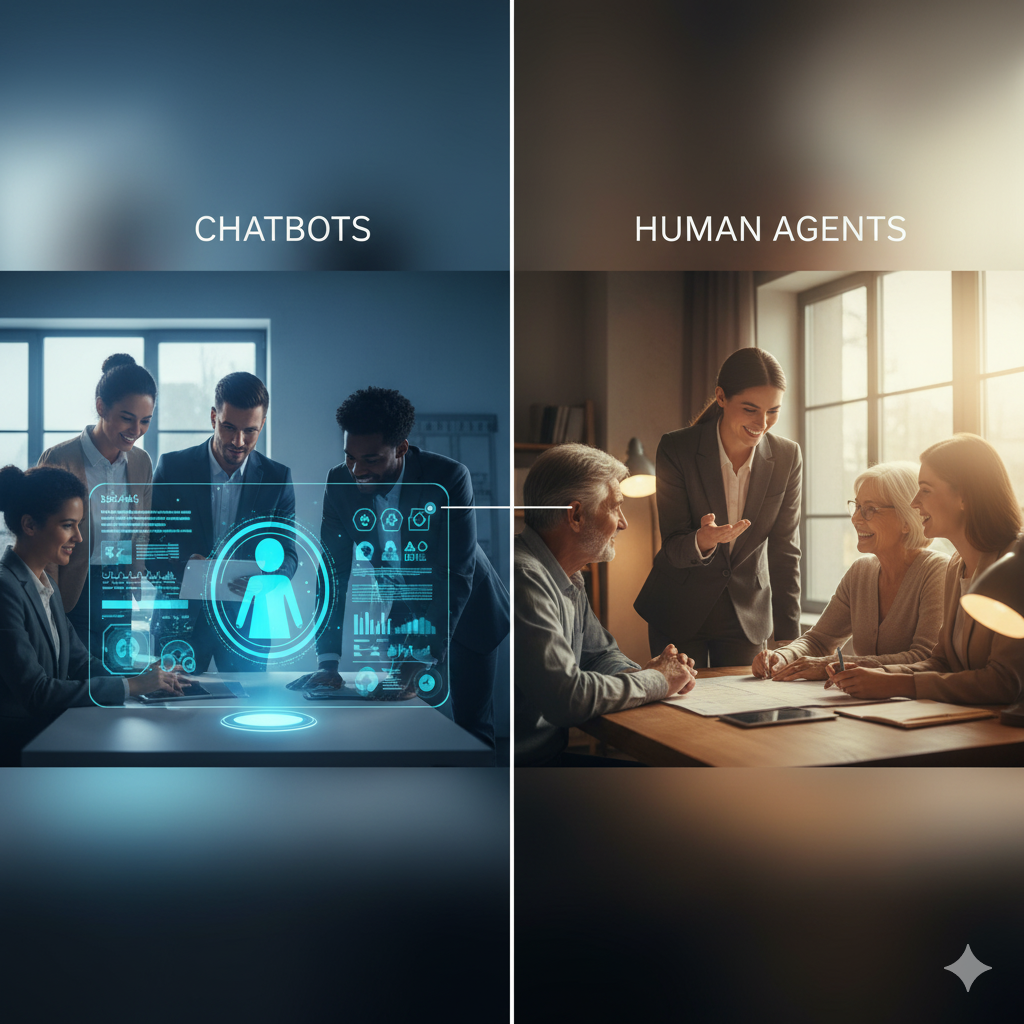
The real estate industry is evolving rapidly. With AI-powered chatbots entering the market, buyers and sellers now have more options than ever to get assistance. But how do these virtual assistants stack up against experienced human agents? In this post, we’ll explore the differences in efficiency, personalization, and availability and even let you test who might handle your real estate needs better with a fun quiz.
AI Chatbots in Real Estate: The New Frontline
Chatbots are transforming how buyers and sellers interact with real estate platforms. Here’s why they’re becoming indispensable:
1. 24/7 Availability
Unlike human agents, chatbots never sleep. They can answer questions at any hour, making them perfect for international clients or night-time browsing.
2. Instant Responses
No more waiting hours—or days—for a response. Chatbots provide instant answers about listings, pricing, and neighborhood info.
3. Data-Driven Insights
AI can analyze thousands of listings and market trends in seconds. This helps users find properties that match their preferences more efficiently.
Limitation: While chatbots are fast, they may struggle with complex negotiations or understanding nuanced personal preferences.
Human Real Estate Agents: The Personal Touch
Human agents have been the backbone of real estate for decades. Their advantages include:
1. Personalized Advice
Agents offer tailored advice based on experience, emotional intelligence, and market intuition—something AI cannot fully replicate.
2. Negotiation Skills
Buying or selling a home often involves subtle negotiation. Human agents excel at reading situations and closing deals favorably.
3. Local Expertise
Humans know neighborhoods in ways a bot cannot. Schools, community culture, and future developments are often only known through local experience.
Limitation: Human agents are limited by time and availability. A busy agent may not respond instantly, unlike a chatbot.
Final Verdict: Collaboration Is Key
Rather than thinking of chatbots and human agents as competitors, the future of real estate lies in collaboration. AI can handle repetitive tasks and provide instant data, freeing human agents to focus on negotiation, relationship-building, and complex decisions.
By combining AI efficiency with human expertise, buyers and sellers can enjoy the best of both worlds.