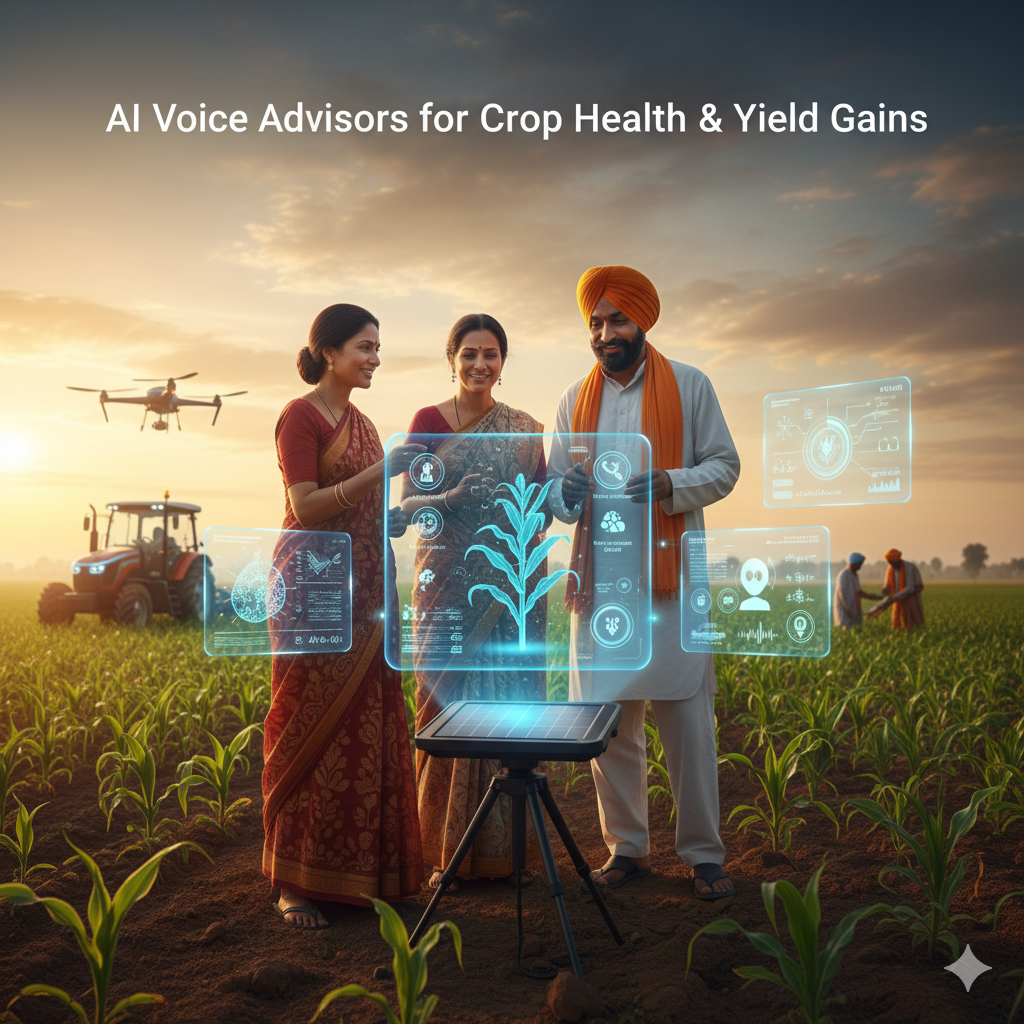
In modern agriculture, technology is reshaping how farmers receive guidance and make decisions. But not all “AI” tools are created equal. Many generic chatbots can answer basic questions, yet they often fail in the field where accuracy, context, and local relevance matter most. Enter AI Voice Advisors intelligent voice agents trained specifically on agronomic datasets, designed to provide precise, timely, and actionable insights to farmers.
The Limitations of Generic Chatbot
Traditional chatbots are built for general conversations. They rely on pre-programmed responses or large language models without domain-specific training. While they can answer simple queries like “What is fertilizer?”, they struggle with nuanced, real-world agricultural questions such as:
“My maize leaves are yellowing, should I apply nitrogen or iron?”
Because generic bots lack agronomic context, they can’t interpret crop symptoms, soil conditions, or regional weather patterns. They also don’t understand the diversity of local languages, dialects, or seasonal crop cycles — all critical for effective farming advice.
Moreover, these text-based bots assume literacy and internet access, excluding millions of smallholder farmers who primarily use feature phones and voice calls.
How Domain-Trained Voice Agents Work
AI Voice Advisors go far beyond simple chat automation. They are trained on rich agronomic datasets — including crop growth stages, pest and disease libraries, soil nutrition models, and local weather data.
When a farmer calls the voice advisor, the AI doesn’t just transcribe and respond. It analyzes the question, cross-references relevant agronomic data, and delivers a personalized voice response — in the farmer’s language.
For example:
“Based on your region’s rainfall this week and the stage of your maize crop, you should apply a nitrogen top-dressing within three days.”
These systems combine natural language understanding (NLU) with domain reasoning, making them capable of two-way, intelligent dialogue. They can diagnose issues, schedule reminders, and collect valuable on-ground data for NGOs, agritech firms, and agri-input providers.
The Impact: From Insights to Yield Gains
Organizations adopting AI Voice Advisors are seeing tangible results:
- Faster Problem Resolution: Farmers receive actionable crop health advice in minutes, not weeks.
- Localized Recommendations: Advice adapts to regional weather, soil, and pest data.
- Higher Adoption Rates: Farmers engage more with voice calls in their native tongue than text apps.
- Data-Driven Programs: Voice agents collect field-level data that helps companies refine inputs and monitor crop outcomes.
The result? Healthier crops, improved yields, and stronger trust between farmers and agricultural organizations. These voice agents don’t just communicate — they learn, adapt, and guide farmers toward better outcomes every season.
Faqs
1. How are AI Voice Advisors trained?
They use curated agronomic datasets, historical crop data, and expert-verified agricultural models to ensure recommendations are accurate and region-specific.
2. Can farmers use them without internet access?
Yes. Voice advisors work through regular phone calls or IVR systems, making them accessible to farmers with basic mobile phones.
3. What makes them better than chatbots?
Unlike generic chatbots, AI Voice Advisors are context-aware. They understand crop stages, soil health, and weather conditions, providing tailored solutions rather than generic responses.
➡ Start Your Journey Today, simply hit the Free Trial button above