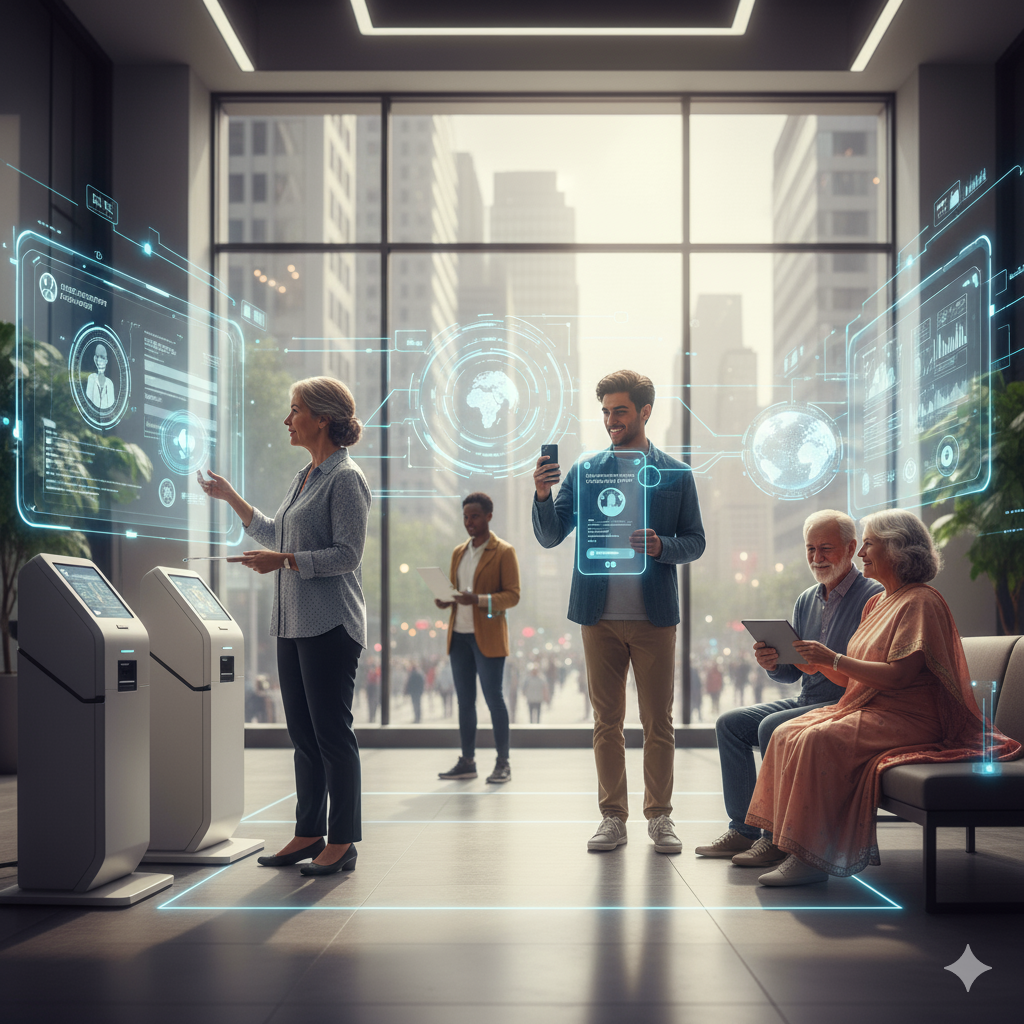
Government services often involve long processes, complex paperwork, and multiple points of contact. In today’s digital era, Artificial Intelligence (AI) is transforming how governments interact with citizens, making services faster, more efficient, and more accessible to everyone. From citizen inquiries to processing applications, AI-powered solutions are reshaping public administration.
In this blog, we’ll explore how AI is making government services smarter and improving accessibility for citizens worldwide.
1. Streamlining Citizen Queries
AI-powered chatbots and virtual assistants are helping citizens get instant answers to common questions about government services. Whether it’s renewing a license, paying taxes, or applying for permits, AI can handle routine inquiries 24/7.
👉 Citizens no longer need to wait in long lines or on phone calls—AI provides immediate, accurate information.
2. Automating Administrative Processes
AI can automate repetitive administrative tasks, such as document verification, data entry, and processing applications. This reduces human error, speeds up service delivery, and allows government employees to focus on more complex tasks.
👉 Example: AI can quickly verify eligibility for social benefits, speeding up approvals for citizens in need.
3. Enhancing Accessibility for Citizens with Disabilities
AI-driven tools like voice assistants and text-to-speech systems make government services more accessible to citizens with visual or hearing impairments. Multilingual AI support ensures that language barriers are minimized.
👉 Governments can provide inclusive services that reach every citizen, regardless of ability or language.
4. Predictive Analytics for Better Decision-Making
AI can analyze large volumes of public data to identify trends, predict service demand, and allocate resources efficiently. For example, predictive models can help manage public transportation, healthcare services, or emergency response.
👉 This makes government services proactive rather than reactive, improving citizen satisfaction.
5. Fraud Detection and Security
AI can detect anomalies in transactions, applications, or claims, helping prevent fraud and misuse of public resources. Smart algorithms identify suspicious activity faster than manual audits, keeping government operations secure.
👉 Citizens benefit from safer, more reliable services, while governments save time and money.
6. Personalized Citizen Experience
AI allows governments to offer personalized services based on citizen profiles. For instance, residents can receive reminders for license renewals, tax filings, or health checkups, tailored to their location and needs.
👉 Personalized interactions make government services more user-friendly and efficient.
7. Improving Public Engagement
AI-powered chatbots, social media assistants, and virtual platforms allow citizens to provide feedback, report issues, and participate in public consultations more easily. This fosters transparent and responsive governance.
👉 AI ensures that citizen voices are heard and acted upon faster.
Final Thoughts
AI is no longer just a technology buzzword it’s a transformative tool for government services. By automating processes, enhancing accessibility, improving security, and personalizing citizen interactions, AI is making governance smarter, faster, and more citizen-centric.
Governments adopting AI solutions are setting a new standard in public service delivery, creating a future where every citizen can access the help they need with ease.