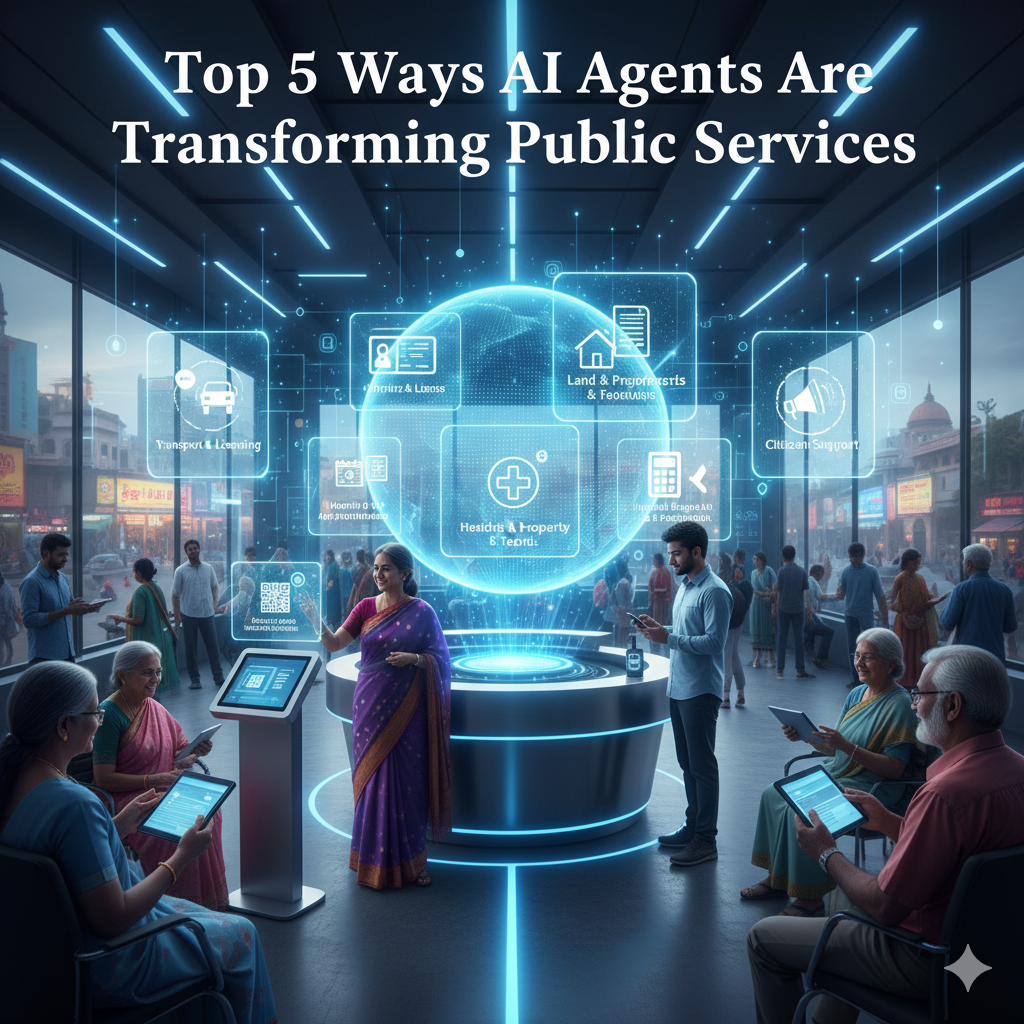
Artificial Intelligence (AI) is no longer just a tech trend—it’s revolutionizing how governments and public institutions serve citizens. AI agents are streamlining operations, improving efficiency, and making public services more responsive and accessible. From handling tax queries to managing social services, AI is reshaping citizen-government interactions.
In this blog, we’ll explore five practical ways AI agents are transforming public services, with real-world examples to show their impact.
1. Streamlining Permits and Licensing
Applying for permits or licenses can be tedious and time-consuming. AI agents in public services can automate the process by:
- Guiding applicants through requirements step by step
- Verifying submitted documents instantly
- Scheduling inspections or appointments automatically
Example: Some city governments now use AI chatbots to help residents apply for building permits online, reducing approval time from weeks to days.
2. Enhancing Social Services Support
AI agents help social service departments manage applications for benefits, housing, or healthcare. They can:
- Answer common citizen questions instantly
- Check eligibility criteria for various programs
- Track application status and provide reminders
Example: Social service chatbots in certain countries now guide citizens through unemployment benefits applications, reducing manual workload and errors.
3. Improving Tax Assistance
Tax seasons can be overwhelming for both citizens and tax offices. AI-powered agents can:
- Provide instant answers to frequently asked questions about forms and deadlines
- Assist in filling out tax forms correctly
- Detect errors or missing information before submission
Example: Some tax authorities use AI assistants to handle millions of queries efficiently, ensuring faster processing and fewer mistakes.
4. Handling Public Inquiries Efficiently
Citizens often have questions about regulations, events, or public programs. AI agents in public services can:
- Respond instantly to routine queries
- Route complex issues to the right department
- Provide multilingual support for diverse populations
Example: Municipal governments use AI chatbots on their websites to answer questions about waste management, public transport, and local events, saving both citizen and staff time.
5. Supporting Emergency and Health Services
AI agents help streamline emergency response and public health services by:
- Collecting citizen reports in real time
- Directing citizens to the right resources or departments
- Providing updates on emergencies or health alerts
Example: During health crises, AI-driven voice assistants have been used to guide citizens on testing locations, vaccination schedules, and safety protocols.
Final Thoughts
AI agents are redefining how public services operate, making them faster, more accessible, and citizen-friendly. By automating routine tasks, handling queries efficiently, and supporting critical services, AI empowers governments to focus on what matters most serving citizens effectively.
Adopting AI in public services is no longer optional it’s a practical step toward smarter governance and better citizen experiences.