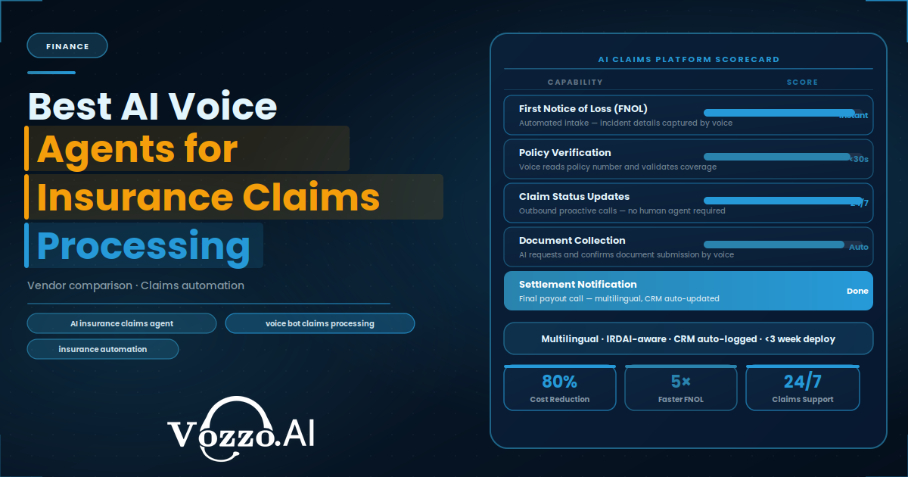
The average insurance claim takes 7–14 days to process. 68% of that time is spent on manual data collection, status updates, and follow-up calls that add no decision-making value. AI voice agents handle all of it, from first notice of loss to settlement confirmation, without a single human touchpoint on routine claims. This is the core promise of an AI insurance claims agent: a system that manages the entire claims conversation while human adjusters focus only on decisions that actually require judgment.
Why Insurance Claims Processing Is the Perfect AI Voice Use Case
Insurance claims follow a highly structured, repeatable conversation. Every claim requires the same basic information: policy number, incident date, incident description, and supporting documentation. This structure is exactly what conversational AI handles best, a fixed set of questions delivered in a natural, empathetic tone, with the flexibility to adapt phrasing to the caller's answers. Insurers processing thousands of claims a month spend enormous effort on this repetitive information-gathering stage before a claim ever reaches a human adjuster's desk.
An AI insurance claims agent removes that bottleneck entirely, running the intake conversation, chasing missing documents, and providing status updates around the clock, so that human adjusters only get involved once a claim is fully prepared for a decision.
How an AI Insurance Claims Agent Works End to End
- FNOL intake: The system captures the first notice of loss through an inbound or outbound call, recording the incident date, location, description, and immediate safety concerns.
- Policy verification: The agent confirms the policy is active and the reported incident falls within coverage, pulling data directly from the policy administration system.
- Damage assessment data collection: The bot asks structured questions about the extent of damage or injury, capturing photos or video links where applicable and logging responses against the claim file.
- Document request and follow-up: The system identifies missing documents, such as repair estimates, police reports, or medical records, and places automated follow-up calls until everything required is submitted.
- Adjuster handoff trigger: Once the claim file is complete, the system flags it as ready and routes it to the appropriate human adjuster, along with a structured summary of everything collected.
- Settlement confirmation call: After the adjuster approves the claim, the agent places a confirmation call to the policyholder, communicating the settlement amount and payment timeline.
Voice Bot Claims Processing What It Handles vs What It Escalates
Voice bot claims processing is deliberately scoped to routine, well-defined claims, and insurers that deploy it draw a clear line between what stays automated and what goes to a human. Routine motor claims, such as a minor collision with clear liability, standard health claims with straightforward documentation, and property claims with limited damage are handled end to end by the voice agent. Complex fraud investigations, disputed liability cases where both parties contest fault, and large-value claims that require senior underwriting judgment are escalated immediately to a human adjuster, with the AI-collected data handed over as a head start rather than a replacement for expert review.
Insurance Automation The Metrics That Matter
Insurance automation delivers outcomes that show up directly on an insurer's operating metrics. Claims processing time falls by 70% when the intake and follow-up stages are automated. Cost per claim drops by 45%, largely because voice agents eliminate the repeated manual calls that previously consumed adjuster and call center time. Customer satisfaction on AI-handled claims reaches 94% CSAT, driven by faster status updates and immediate responsiveness. Inbound call volume asking simply what is the status of my claim falls by 60%, since the agent proactively pushes updates instead of waiting for the policyholder to call in. And the handoff from FNOL to a human adjuster happens 3x faster, because the claim file arrives fully documented instead of requiring the adjuster to chase information themselves.
IRDAI Compliance in AI Claims Calls
Every AI claims call operating in the Indian insurance market has to meet IRDAI's disclosure and consumer protection requirements. Policyholders must be clearly informed at the start of the call that they are speaking with an automated system, along with an option to reach a human agent if requested. Call recording obligations apply just as they would to a human agent, with recordings retained and available for audit or dispute resolution. Grievance redressal integration is also essential, the AI system must be able to recognize when a caller wants to file a complaint and route that request into the insurer's formal grievance process rather than attempting to resolve it within the automated flow.
How Vozzo AI Powers Insurance Claims Voice Automation
Vozzo AI powers claims voice automation for insurers handling motor, health, and property lines, integrating directly with policy administration and claims management systems so that every call updates the claim record in real time. The platform's IRDAI-aligned call scripts and built-in grievance escalation logic let insurers automate routine claims confidently, while its multilingual voice engine ensures policyholders across India can complete a claims call in the language they are most comfortable with.
See how Vozzo AI transforms claims processing for insurers — book a demo at vozzo.ai