A 250-bed multispecialty hospital in Coimbatore had 200 OPD appointments scheduled for a Tuesday. By 11am, 54 patients hadn't shown up — 54 empty consultation slots, 54 x Rs 800 in consultation fees, Rs 43,200 in revenue that walked out the door. Not because patients cancelled. Because nobody called to remind them.
The No-Show Problem Indian Hospitals Are Underestimating
OPD no-show rates in Indian hospitals average 22-35%, significantly higher than global benchmarks of 10-15%, because manual reminder processes are inconsistent and understaffed. A missed appointment is not just lost consultation revenue — it is a wasted specialist slot, a disrupted OPD flow, and a patient whose health condition goes unmanaged for longer than clinically optimal.
Reception teams making manual reminder calls can cover 30-40% of scheduled appointments at best. The rest get an SMS that 60% of patients in tier 2 cities do not read or act on. And the patients most likely to no-show are the ones who most need the reminder — elderly patients, first-time visitors, patients travelling from outside the city.
This is exactly the gap hospital appointment reminder automation was built to close: covering 100% of appointments, in the patient's own language, without adding headcount to the front desk.
What an AI Voice Agent Does for Appointment Reminders End to End
The workflow runs quietly in the background of the HMS, not as a separate manual process.
- The HMS or appointment system feeds scheduled appointments to the AI platform automatically — no manual export, no daily setup.
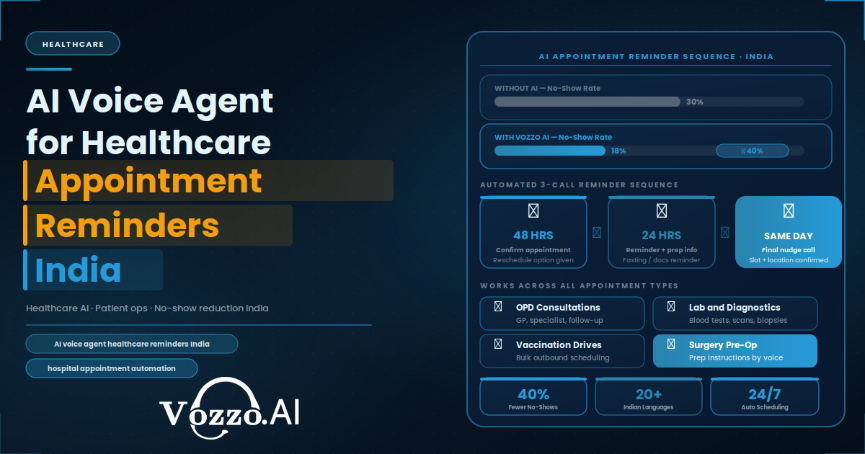
- The AI makes an outbound reminder call to each patient 24 hours before their appointment in their registered language — Tamil, Telugu, Hindi, Kannada, Marathi, or Malayalam based on the patient profile. This is the core of what a genuine AI voice agent for healthcare appointment reminders India needs to get right: the right language, the right patient, the right time, every single time.
- The patient confirms, reschedules, or cancels during the call, and the AI updates the HMS in real time with the patient's response.
- For cancellations and reschedules, the AI checks available slots and offers alternatives during the same call — the slot gets refilled without any reception team involvement.
- A second reminder call goes out 2 hours before the appointment for patients who confirmed but are high no-show risk — chronic patients, elderly patients, long-distance visitors.
- For patients who don't answer, the AI attempts the call twice more at 30-minute intervals, logs the non-response, and alerts the reception team for manual follow-up on high-priority appointments.
- A post-appointment follow-up call goes out 48 hours after the visit — a medication adherence check, a recovery status check, and next-appointment scheduling for chronic care patients.
Before vs After AI Appointment Reminders for a 200-Bed Hospital
Before: the reception team makes reminder calls to 40% of patients, the no-show rate sits at 28%, 56 slots go empty per week across OPD, weekly revenue loss runs Rs 44,800 at Rs 800 per slot, there is no rescheduling process for cancellations, and post-appointment follow-up is non-existent for most patients.
After: 100% of appointments receive an AI reminder call, the no-show rate drops to 11%, 34 additional consultations get completed per week, cancelled slots are refilled during the same call, post-discharge follow-up runs automatically for chronic care patients, and the reception team is freed from reminder calling entirely.
Why Appointment Reminder Voice Calls Outperform SMS and WhatsApp in India
Patient demographics skew older. SMS read rates among patients above 55 in tier 2 and tier 3 cities are below 40%. A voice call in their language reaches them regardless of smartphone literacy.
Voice creates confirmation, not just notification. An SMS tells the patient about the appointment. A voice call gets a spoken confirmation, a reschedule, or a cancellation — actionable data that SMS cannot generate.
Language personalization drives response. A Tamil patient receiving a reminder call in Tamil responds differently than one receiving a generic Hindi SMS. Language-matched voice reminders have 3x higher confirmation rates than language-mismatched SMS.
Chronic patient adherence requires dialogue. A diabetic patient's appointment reminder is also an opportunity to ask about medication adherence and flag concerns before the visit. SMS cannot do this. Voice can.